Why Gelato Just Might Be the Sweetest Business in Food Service
Why Gelato Just Might Be the Sweetest Business in Food

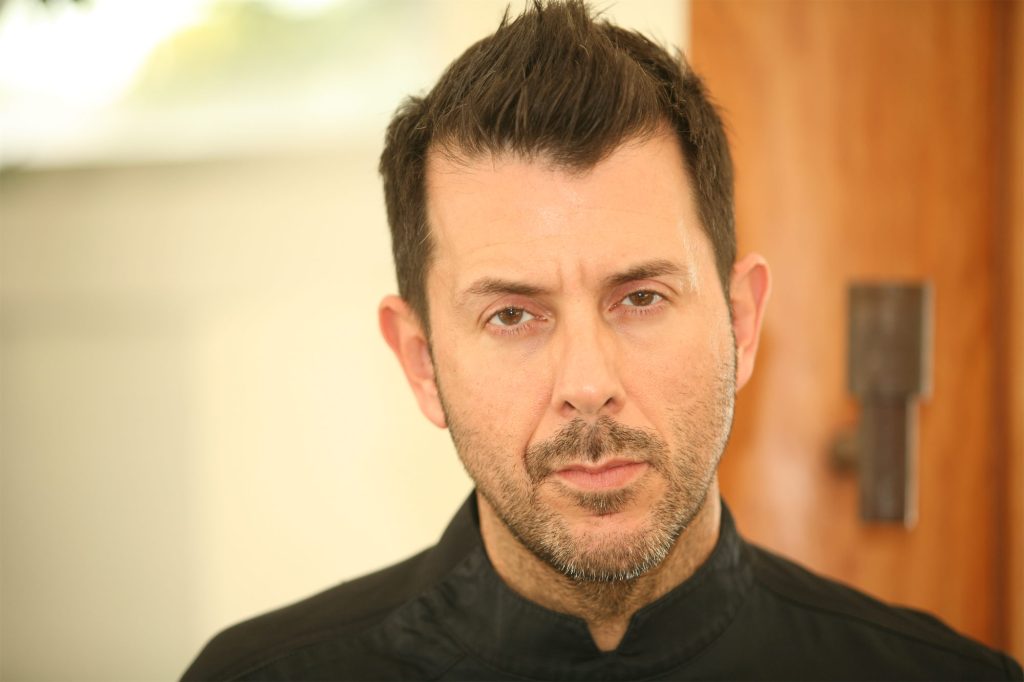
~ by Chef Kriss Harvey
Chef Kriss Harvey takes us back to a turning point in his frozen dessert journey—when he first encountered the Bravo Trittico 305 Executive and the brilliant gelato mind behind it, Giuseppe Scaringella. From game-changing tech to flavor science, this story is packed with insights every gelato pro will appreciate.
(This is an excerpt, but if you’d like to read the full post then scroll further down.)
…About a year later, Pascal called me and told me that if I had the time, that I should drive up to take his ice cream class. He told me that he installed a really neat piece of equipment from Italy. I wasn’t familiar with the brand but always eager to learn. I told him that I would drive up after Easter dinner service and I would be in class Monday morning.
The equipment that he was bragging about was Bravo Trittico 305 Executive model. It was a game changing machine that heated the ice cream or sorbet to pasteurization and froze it all in one footprint. It not only did that, it would make pastry cream, jam, curds, custards and even temper small batches of chocolate. It had a tank on top of the machine that was easy to top load and when the product was cooked to temperature, you would open a valve and the contents would spill into the horizontal turbine and the machine would process it into ice cream or sorbet. No more stirring the ice cream base over heat. All you had to do was blend the milk or water with the dry ingredients, add it to the tank, close the lid and in a matter of minutes, your base was cooked to temperature and it was safely frozen minutes later. It all but eliminated any concern about food borne illnesses since it was frozen to -15C minutes after it was cooked to 85 C. No more stirring over an ice bath and no danger of burning the bottom of the pot.
But the machine wasn’t the star of the show. The star of the show was in Pascal’s kitchen and it took me about 15 minutes to realize that the guy that Bravo sent from Italy with the machine was a gelato maestro in gelato. His name was Giuseppe Scaringella. He knew so much about frozen desserts that he could fix Pascal’s recipes just by looking at them. All this time, I thought I was making really great ice cream and sorbet because they tasted great. But this guy was an engineer of ice cream. He could not only make it taste delicious, he could make it perfectly textured. He was so adept at his craft that one time at lunch, he held up a bottle of diet Pepsi and said, “If I knew what was in this, I could make sorbet from it and it would be perfect.” He then went on to explain that knowing what is in something would give us the ability to make that product into ice cream or sorbet. He handed us a chart (in Italian of course) of what was in every fruit that you’d want to make sorbet out of. It listed the fiber, sugar, water, wasted pulp and acid. The entire idea was to use more water, more sugar, more natural stabilizers in order to make sorbet out of any fruit and to make money from it. You can only sell a lime for .50 cents but you can sell one scoop of lime sorbet for $2.00 or more. We will get to sorbet in another chapter as it is a massive topic to discuss.
Before social media made it easy (and inexpensive) to market your brand and innovations, if you wanted to reach new people, you had to hit the road and go on tour. One day in 1994, Sylvain said to me, “Hey Serge, Pascal Janvier is doing a demo in Gaithersburg. I signed up for it. It is two days next week.”
I had no idea who Pascal Janvier was or what his credentials were. But he was a pastry chef and his title was Technical Manager of Cocoa Barry North America. He was in charge of Cocoa Barry (now swallowed up by Callebaut and known as Barry Callebaut) and he ran the small school outside of Philadelphia in Pennsauken, New Jersey that offered classes throughout the year. He and the Vice President of Marketing would tour the country holding product demonstrations at local culinary schools or gourmet distributors that had display kitchens. They would ask the local distributor of their chocolate to invite chefs. It was nothing more than a two day pitch to encourage usage of their products and it worked. It built in brand loyalty and of course, we learned a variety of recipes and brought them back to our kitchen and tested them out. It was great for me. I was so early in my career, I really needed to taste as much as I could. There were also a lot of terms and phrases being used that were way over my head. Learning the language of your craft goes hand in hand with actually performing your craft.
Pascal did his thing over two days and of course, I was mesmerized. He was effortless in his execution and worked immaculately clean. Of course, that is because he put in years and years of working behind the scenes when nobody was paying attention. He was an expert because he worked to become one. Sylvain was my first real mentor pastry chef and I was learning a lot and learning it fast. But learning from others was something I needed. At the end of the demonstration, Pascal announced the class schedule for 1994 at the school in New Jersey. I signed up immediately.
At the time, The Ritz Carlton had a reimbursement program for continuing education. I am sure that they didn’t expect a low level pastry cook to take advantage of it but I did. I used my vacation time and my hotel rooms benefit and scored a sweet room for $75.00 per night at the Ritz Carlton Philadelphia.
The class was filled with a mix of chefs from all around the country. I probably had the least experience of the group. It didn’t matter to me. I learned a tremendous amount and I also learned that I needed to learn a lot more. Gathering that knowledge wasn’t going to happen overnight.
I hit it off with Pascal and we became good friends. I still have the course book after all of these years. In fact, he taught me to make my very first ganache for molded bonbons; a black currant caramel ganache that I still make to this day.
About a year later, Pascal called me and told me that if I had the time, that I should drive up to take his ice cream class. He told me that he installed a really neat piece of equipment from Italy. I wasn’t familiar with the brand but always eager to learn. I told him that I would drive up after Easter dinner service and I would be in class Monday morning.
The equipment that he was bragging about was Bravo Trittico 305 Executive model. It was a game changing machine that heated the ice cream or sorbet to pasteurization and froze it all in one footprint. It not only did that, it would make pastry cream, jam, curds, custards and even temper small batches of chocolate. It had a tank on top of the machine that was easy to top load and when the product was cooked to temperature, you would open a valve and the contents would spill into the horizontal turbine and the machine would process it into ice cream or sorbet. No more stirring the ice cream base over heat. All you had to do was blend the milk or water with the dry ingredients, add it to the tank, close the lid and in a matter of minutes, your base was cooked to temperature and it was safely frozen minutes later. It all but eliminated any concern about food borne illnesses since it was frozen to -15C minutes after it was cooked to 85 C. No more stirring over an ice bath and no danger of burning the bottom of the pot.
But the machine wasn’t the star of the show. The star of the show was in Pascal’s kitchen and it took me about 15 minutes to realize that the guy that Bravo sent from Italy with the machine was a gelato maestro in gelato. His name was Giuseppe Scaringella. He knew so much about frozen desserts that he could fix Pascal’s recipes just by looking at them. All this time, I thought I was making really great ice cream and sorbet because they tasted great. But this guy was an engineer of ice cream. He could not only make it taste delicious, he could make it perfectly textured. He was so adept at his craft that one time at lunch, he held up a bottle of diet Pepsi and said, “If I knew what was in this, I could make sorbet from it and it would be perfect.” He then went on to explain that knowing what is in something would give us the ability to make that product into ice cream or sorbet. He handed us a chart (in Italian of course) of what was in every fruit that you’d want to make sorbet out of. It listed the fiber, sugar, water, wasted pulp and acid. The entire idea was to use more water, more sugar, more natural stabilizers in order to make sorbet out of any fruit and to make money from it. You can only sell a lime for .50 cents but you can sell one scoop of lime sorbet for $2.00 or more. We will get to sorbet in another chapter as it is a massive topic to discuss.
During that time, chefs made ice cream from crème anglaise. For whatever reason, perhaps the lack of science, lack of knowledge and certainly, a lack of ingredients accessible to chefs was to blame. I opened up the lesson book and my head was swimming after glancing through it. Many of the ingredients were completely foreign to me; dextrose, atomized glucose, non-fat milk solids, stabilizers for ice cream, stabilizers for sorbet…not only had I not heard of these, I obviously had no idea where to source them.
As Giuseppe explained, gelato is just how Italians say “ice cream.” There are structural differences in ice cream vs. gelato. Gelato is much less fat than American ice cream. Cream does not make your ice cream creamier. It makes it lighter in weight. It even seems warmer on the palette when compared to gelato which seems denser and colder when you eat it. This is because gelato is made mostly with milk and doesn’t capture as much air as ice cream does. The air captured in the fat of any ice cream is referred to as “overrun.”
American ice cream can go as high as 16% butterfat. This would give the maker much more overrun and a very light ice cream. Gelato is 8%-10% fat. That is a considerable difference.
I would also argue that gelato is different in its flavor profile vs. ice cream. They say in Italy, if you have more than 12 flavors in your shop, you don’t have one good flavor. They tend to focus on the traditional such as pistachio, fig, hazelnut, vanilla etc. You would be hard pressed to find popcorn and cookie dough gelato in an Italian gelato shop. It is also treated as an art form that people go out to eat and to be social with. Americans have lost that as a pastime and even though we buy a lot of ice cream in the USA, it is mostly consumed at home.
Years ago, I would go to the grocery store with my mother and she would let me pick out the ice cream. Hidden away in the depths of the grocer’s freezer was a mostly ignored frozen dessert called, “ice milk.” No one ever bought it and it was always covered in frost and ice. The FDA never allowed it to be called ice cream due to its 10% butterfat content. Does that sound familiar? Yup…even though we don’t classify gelato in the USA, that is what it was.. In 1994, the FDA, after years of being bothered by lobbyists to categorize it as low fat ice cream, finally relented and allowed the name change. Sales rocketed after the name change.
When I was finished with my stage, I drove back to Washington and asked the storeroom purchasing manager to find atomized glucose. The internet was in its infancy in 1994 so she struck out. She suggested that I call one of the large corn manufacturers in the midwest so that’s what I did. I somehow found the number for Archers Daniel Midland. I naively thought that I could just buy a sack of glucose powder from them.
“Good morning ADM. How may I assist you?”
“Hi! My name is Kriss Harvey and I am a pastry chef in Washington, D.C. I am looking for atomized glucose. Do you have any?”
“I will have to connect you with a chemist. One moment. “
Moments later, a chemist picks up the line.
“Hi. My name is Kriss Harvey, a pastry chef from Washington, D.C. I am looking for atomized glucose. Do you have any?”
“We call that dextrose monohydrate. What are your needs?” he asked.
“Oh, I am making ice cream and sorbet,” I replied.
“Well, how much do you need?” he asked.
“About a pound of dextrose and a pound of glucose powder.”
“Oh,” he said. “We only sell by the carload.”
“What’s a car load?”
“Ya know…a train car.”
Yup. That is why chefs couldn’t get any dextrose or glucose powder back then. It all went to the industrial candy, confection and ice cream makers. The big guys took it all.
ADM did send me a working sample of both glucose and dextrose. I went to work on changing my recipes over from the standard creme anglaise to actual properly formulated and specific recipes for ice cream.
And I realized you only need a few different ice cream formulations in your repertoire. You need a recipe for a base ice cream, a dark chocolate ice cream, a caramel and a nut paste ice cream. I will throw in a few odd flavors here and there but that comes later.
There are two types of ice cream bases: Base ice creams and problem ice creams. A base ice cream is a blank canvas. You can infuse flavor into it with vanilla, ginger, coffee, cinnamon, fresh mint, etc. Problem bases are ones that have additional fats added to them such as chocolate and nut pastes. You have to account for the fats added as they will become super hard once they are frozen. Ones that are caramelized or feature honey also need to be adjusted and we will do that by adding egg yolks.
Ice cream is essentially made of two ingredients: milk and sugar. Sugar makes your ice cream creamy. It gives it a starting mouthfeel and then a stabilizer is there to round up the texture. Milk and cream are made mostly of water and water gets hard when frozen.. Sugars will prevent your ice cream from freezing too hard. (We are going to use a few different types of sugars in our recipes so get ready to add a few to your pantry). Cream is there for mouthfeel and to capture air for lightness.
Using whole milk, 2% milk or skim milk is your choice. It won’t make much of a difference. Milk is mostly water with some fat, some minerals and a variable amount of milk sugar (lactose). But again, look at it as a blank canvas because the milk is just a delivery system of your flavor imagination.
Egg yolks, once prized for their ability to emulsify due to the high amount of lecithin, have been replaced with commercially made and blended stabilizers and emulsifiers. We will use egg yolks to compare two plain ice cream bases plus we will use yolks to “fix” our caramel and honey ice creams. More on that later.
Here is a breakdown of what the ingredients in ice cream are made of:
Milk is the lacteal fluid of the female species of the bovine. It is mostly water (nearly 90%) followed by fats, sugar (lactose) and minerals. The maestro was using 2% milk for his gelato recipes but I suggest whole milk. You still have to look at it as water and it is simply the delivery system of the flavor that you are making.
Cream is a mixture of water, fats, lactose and minerals and will help “capture” air that is being introduced into the base (overrun) as it churns in your batch freezer or Pacojet. More cream doesn’t make ice cream better. It just makes it lighter.
Sugar (sucrose) is the main sweetener in ice cream but other sweeteners that aren’t necessarily sweet to the tongue will help condition the ice cream for a finer texture. It is 100% on the sweetness scale and is made up of 50% glucose and 50% fructose. It is derived from cane or sugar beets.
Dextrose is a simple sugar derived from corn and has the identical make up of atomized glucose. It is 50% the sweetness of sugar and it can be used in ice cream and sorbet in equal proportions of glucose powder if that isn’t available. It is commonly used by the confectionary industry on the exterior of hard candies and gum to give a cooling effect to your mouth when eaten.
Atomized glucose is another simple sugar that is sprayed and freeze dried. It is also derived from corn but can also come from grapes. It is slightly sweeter than dextrose but not as sweet as sucrose coming in at 75% the sweetness of sucrose.
Milk Solids Non-Fat (MSNF)- Simply put, this is milk powder. This gives you an improved texture by adding protein without adding water. Remember that water can be the enemy. It is another form of structure for your base.
Amber Malt Powder is similar to atomized glucose and is 65% the sweetness of sucrose. It is available online or at beer brewing supply stores. Swap this one for one with atomized glucose to give your ice cream a delicious warm malt flavor that matches perfectly with vanilla beans. It tends to taste better in a French style ice cream base to give it an all American style flavor (recipe below).
Inverted Sugar (also known as trimoline) is 28 -33% sweeter than sucrose and it has several purposes in pastry, ices and confectionery. In baked goods, it lends a hand by adding a large dose of sugar to your baked items and creates a beautiful golden color as well as sweetness and increases moisture content. It’s purpose in ice creams is to soften saturated fats like chocolate and nut pastes. Giuseppe would refer to it as “industrial honey” and indeed he was spot on. Honey is naturally inverted and can be swapped out equally if you don’t have access to trimoline. Be aware that honey has flavor and varies from mild to very strong.
Stabilizers are available for ice cream and sorbet and they are two different things. Ice cream stabilizers are made of both stabilizing agents and emulsifiers derived from plants, trees and sea vegetables. Ice cream stabilizer contains a monostearate that emulsifies the fats and waters in the dairy base. A monostearate is superfluous in sorbet so it is important to have a separate sorbet stabilizer. I use Cremodon 30 for ice cream and Cremodan 64 for sorbet. Cremodan 64 includes gelatin so if you’re picky about leaving your sorbets vegetarian friendly, you may want to use a brand such as Sevarome or Louis Francois. They are very good options. The word, “stabilizer,” seems to have a poor connotation as if it is artificial or does something dubious. We should change the name to “essential.” And indeed, they are essential. Because they are made of gelling agents, they enhance the mouthfeel and texture. And because you are incorporating air into your base, you need something to help hold that air into the base to retain the mouthfeel. Every time you pull it out of the freezer, the ice cream or sorbet starts to melt. Even a little bit of melting can harm the texture and make the ice crystals larger and that has an affect on your palette. So don’t think of them as bad. They are as necessary in your ices just like adding baking soda to your chocolate chip cookies and it is just as natural.
The Recipes:
Mix the dry ingredients well and whisk into the base at 50 C. Continue to whisk until a temperature of 85 C is reached. Immediately remove the contents into a bowl and plunge that into a substantial depth of water and ice and continue to whisk until a safe temperature zone is found.
The base will gel slightly as it cools. Break this up with a whisk and strain through a chinois. The base can be churned in a traditional batch freezer or divided into Pacojet beakers and processed via reconstitution. Alternately, you can freeze the base as is and defrost and churn for production and service.
Notes about this recipe :
You can use this recipe to infuse any flavor that you’d like into it. Steep any flavor in the milk, strain, measure the milk to make sure that you have the original amount that you scaled. If you want to use ginger, peel it and blanch in hot water and refresh in cold water. If you skip this step, the ginger could curdle your milk. If using mint or basil, heat the herbs in the milk and blend it until the herbs are completely pureed. This will give you the best depth of flavor. If you want to make coffee ice cream, use a blend of coarsely ground coffee beans and cocoa nibs. This will give you great flavor without the coffee being too harsh. For stracciatella, melt some chocolate. As you extract the ice cream from the batch freezer, stir in the melted chocolate and break it up with a metal gelato spatula.
French Vanilla Ice Cream with Egg Yolks
Warm the milk, cream and vanilla to 50 C.
Measure the dry ingredients. (Always measure the additives on a microgram scale. In this case, I am referring to the stabilizer).
Use pasteurized egg yolks. If using fresh, whisk them thoroughly.
Mix the dry ingredients well and whisk into the base at 50 C. Add the egg yolks and continue to whisk until a temperature of 85 C is reached. Don’t bother dumping the hot dairy into the egg yolks to temper them. That is a waste of time. They won’t scramble at 50 C. Just add them with the dry ingredients and start whisking them until 85 C is reached.
Immediately remove the contents of the pot into a bowl and plunge that into a substantial depth of water and ice and continue to whisk until a safe temperature zone is found.
I always cool any egg yolk based preparation (custard, curds etc.) first then pass through a chinois after it is cold and in no danger of overcooking. Getting it out of the pan that you cook it in should be your priority. Straining it when the temperature drops is much safer for your products.
Chocolate ice cream is one of my favorite subjects to discuss. I had a client years ago that once asked me, “Why doesn’t my chocolate ice cream taste chocolatey?” I knew the answer but it is always an important exercise to walk a client or student through the process so they have an understanding of what went wrong versus just giving them the answer.
“What kind of chocolate did you use?”
“I used 58% semi-sweet Cacao Barry,” she replied.
Just as I suspected.
“Ok, so it is a pretty light tasting chocolate as is. Once you dump all that dairy on it, it is further diluted. So let’s say that 58% chocolate is now theoretically a 30-35%. Those numbers don’t exist in dark chocolate but that is what it has been rendered down to after diluting it. Furthermore, the overrun has been introduced to the base by 30% so now the chocolate flavor has been reduced even further. And on top of all that, you’re eating it frozen and it will take a few moments to warm up in your mouth in order to release any flavor. So taking all of that into consideration, the cure for this issue is to use a very bitter chocolate in your base; 70% and higher.”
In fact, I use 80% from Valrhona called Cœur de Guanaja. It is barely edible out of the bag since most of the cocoa butter has been stripped out of it. Don’t believe me? Try to melt it; it will barely weep let alone melt with any fluidity. It is not meant to be eaten out of hand but it really shines under preparation. It is fantastic in a salted butter caramel or pastry cream but really shines in ice cream.
Chocolate Ice Cream, Extra Bitter
Warm the milk to 50 C. Mix all of the dry ingredients well and measure the invert sugar on top of the dry ingredients. Add all of the dry ingredients plus the inverted sugar when the dairy reaches 50 C and continue to whisk up until you reach 85 C. Pour over the chocolate and blend with an immersion blender. Cool in an ice bath. Blend it after cooling and process in a batch freezer or Pacojet.
Notes about this recipe :
The inverted sugar keeps the ice cream soft, smooth and scoopable at a negative temperature. If it wasn’t there, the frozen fats in chocolate would cause the ice cream to be rock hard and crumbly.
Caramel Ice Cream
Warm the first measurement of cream. Dry caramelize the sugar to 193 C. Arrest with warm cream. Add the milk, the second measurement of cream. Warm to 50 C while whisking. Mix the dry ingredients thoroughly. Add this, the egg yolks and the inverted sugar to the contents of the pot. Whisk up to 85 C for 5 seconds. Remove from the pot into a bowl. Plunge into an ice bath, cool, strain and process in a Bravo gelato machine. .
Pistachio or Hazelnut Ice Cream
Warm the milk and the cream to 50 C
Mix the dry ingredients thoroughly. Add this to the contents of the pot. Whisk up to 85 C for 5 seconds and pour over the nut paste. Blend with an immersion blender. Plunge your base into a substantial depth of water and ice and continue to whisk until a safe temperature zone is found. Process in a batch freezer or a Pacojet.
Why Gelato Just Might Be the Sweetest Business in Food
If you’ve ever strolled through Italy—or, let’s be honest, your local tourist district—you’ve seen it: towering, neon-colored mountains of “gelato,” piled high like sugary Alps. Tempting? Sure. Authentic? Not even close.
I saw numerous “gelaterie” open and close through the years, such as Grom in Malibu. So I decided to research and locate some of these establishments today, and ended up focusing on just two “gelatai.”
Chef Kriss Harvey takes us back to a turning point in his frozen dessert journey—when he first encountered the Bravo Trittico 305 Executive and the brilliant gelato mind behind it, Giuseppe Scaringella. From game-changing tech to flavor science, this story is packed with insights every gelato pro will appreciate.
Starting a gelato business may sound like a dream come true. Perhaps you visited Italy and experienced countless people enjoying gelato at every corner or every street!
So, you’ve got dreams of serving up scoops of Italian-style gelato to fanatical customers, but you want to do it with style, mobility, and confidence you’ve made the right choices.